About Skeppsudden
Our history
Skeppsudden is more than a place. It is a life’s work stretching across generations, a vision, and a living presence, born from a deep longing for nature, the sea, and a freer, more conscious way of living.
In the 1970s, Claes Nordenskjöld chose to leave the pace and pressure of city life behind to seek a closer relationship with the land. After studying agriculture at Vreta Kloster with the intention of becoming a farmer, another path gradually revealed itself. Claes travelled extensively around the world, encountering spiritual traditions and living communities that would profoundly shape his life. Among these influences were Osho and international spiritual communities, as well as shamanic cultures and Indigenous tribes of North America.
Through these journeys, his vision shifted — from farming the land to creating a place where people could gather, grow, heal, and remember who they truly are, in harmony with nature.

An abandoned farm by the sea
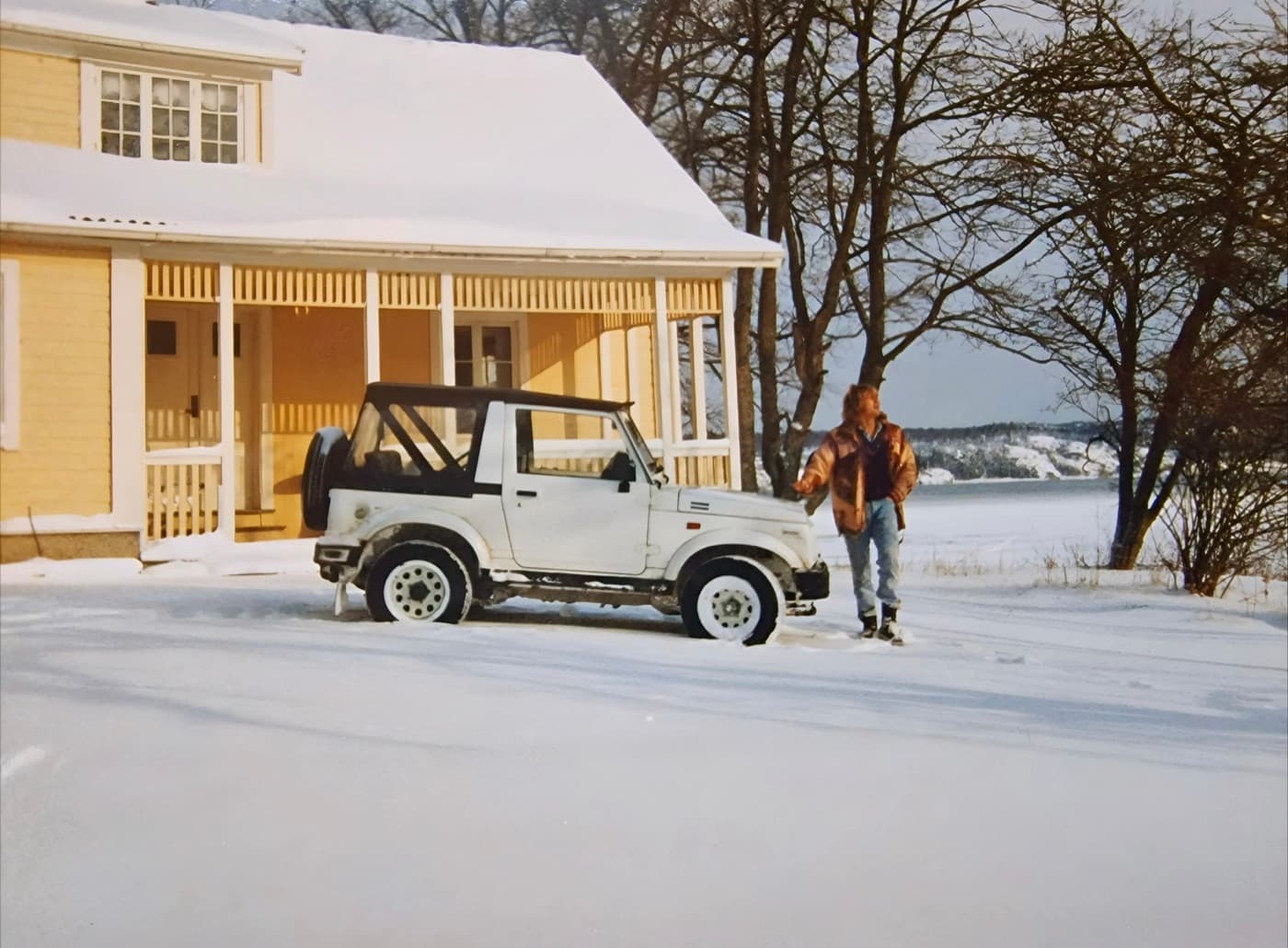
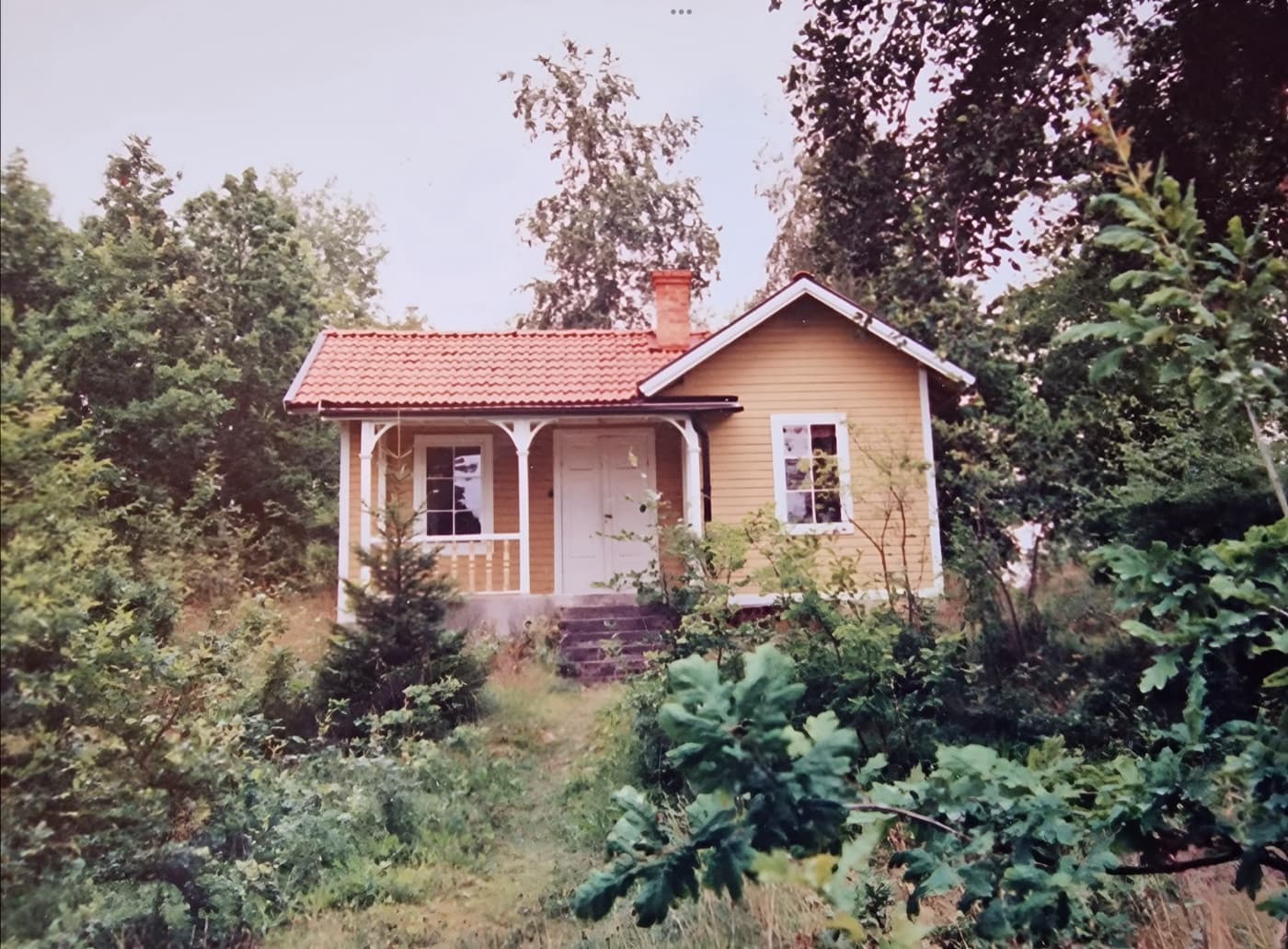
Skeppsudden fulfilled everything Claes was searching for: close enough to Stockholm, a traditional farm with a barn, and the sea as its closest neighbour. It became his harbour.
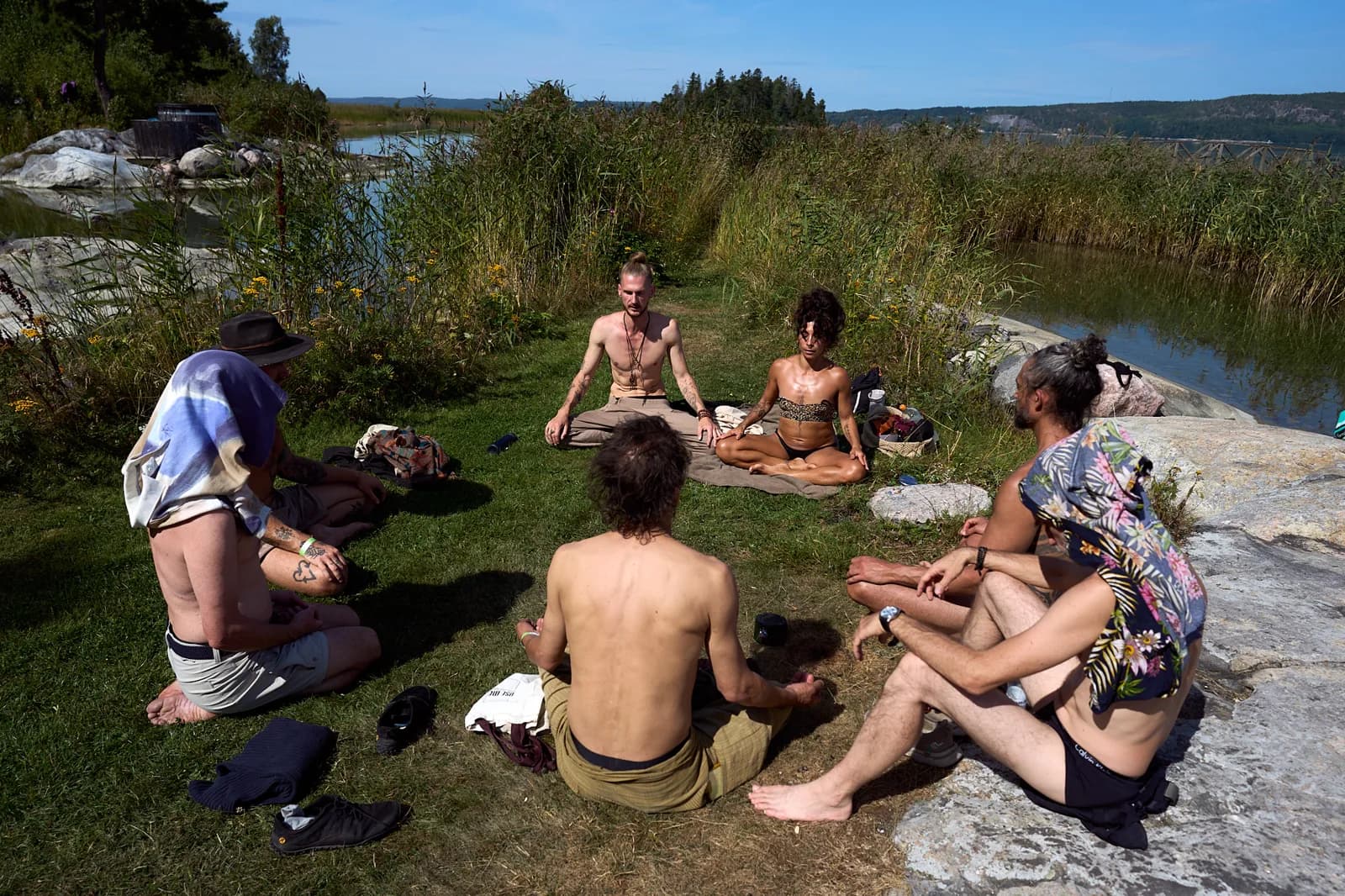
At the time, the farm had no electricity, no running water, and no modern comforts. Step by step, Skeppsudden was rebuilt and transformed into what came to be known as “Fridens Lustgård” — The Garden of Peace, a safe and welcoming home where stillness, vitality, and human connection are at the centre. Just one year later, the first courses and gatherings began, and since then, Skeppsudden has been a living meeting place for midsummer celebrations, ceremonies, retreats, and shared experiences that have touched thousands of lives.
Today, Skeppsudden stands firmly on its own — a mature, living entity rooted in the nature of Bråviken.


“Its purpose is to create a paradise of connection — to self, to others, and to something larger.”

Our Mission
A living system, not a machine
Skeppsudden is organised as a self-managing, purpose-driven organisation inspired by what is often called a teal way of working. Teal describes organisations that operate with decentralised authority, a strong sense of purpose, and space for people to show up as whole human beings. Instead of a traditional hierarchy with managers at the top and instructions flowing downward, we work as a network of responsible adults who share ownership of the whole.
Authority and trust
Authority here is not tied to position. It is linked to responsibility, experience, and proximity to the work. Our core principle is simple: the people closest to the work are trusted to shape how the work is done.
The Advice Process
To make this practical, we use a clear decision-making method called the Advice Process. Anyone in the organisation can make a decision within their area of involvement. Before deciding, they seek input from people who will be affected and from those with relevant knowledge or experience. After genuinely considering this input, the decision maker chooses how to proceed and takes responsibility for implementation. Later, outcomes and learnings are shared so that the whole organisation can benefit. This allows us to stay agile while remaining thoughtful and accountable, without relying on a central authority for every choice.
An evolutionary purpose
We are guided by what we call an evolutionary purpose, another key aspect of teal organisations. Our purpose is to create a paradise of connection. By paradise, we mean a place that supports connection to oneself, to others, and to something larger. This purpose is not a fixed slogan. It is an ongoing orientation that influences how we design spaces, care for the land and buildings, host retreats and gatherings, and relate to each other as a team. We regularly return to the question: does this choice move us closer to a place of deeper connection?
Shared rhythms
Self-management only works when supported by shared rhythms and clear structures. Our days and weeks have a simple backbone. Short daily morning meetings help us ground, connect, and coordinate practical tasks. Weekly relational meetings create a dedicated space to address tensions early, speak honestly, and maintain healthy collaboration. Larger vision meetings help us align long-term direction with our actual capacity and resources.
Rotating hats
Many everyday responsibilities are held through rotating roles that we call “hats.” A hat is a bundle of practical tasks connected to a specific area, such as food, kitchen, laundry, firewood, or recycling. Hats rotate over time so that care for the place is shared, visible, and understood by everyone. This creates both fairness and a deeper relationship to the whole of Skeppsudden, in balance with letting one focus on one’s preferred tasks.
Wholeness
We also place strong value on wholeness, the third core dimension of teal. We do not see people as functions or job descriptions. We recognise that emotional states, life circumstances, and inner processes affect how we work and collaborate. Space for reflection, check-ins, and honest conversations is part of our culture. At the same time, we hold clear agreements and boundaries. Freedom here is not the absence of structure. It is the presence of trust, clarity, and shared responsibility.
In essence, Skeppsudden is not organised like a machine built for efficiency alone. We see it as a living system. Our role is to tend that system with care, maturity, and responsiveness, so that both people and place can thrive over time.